

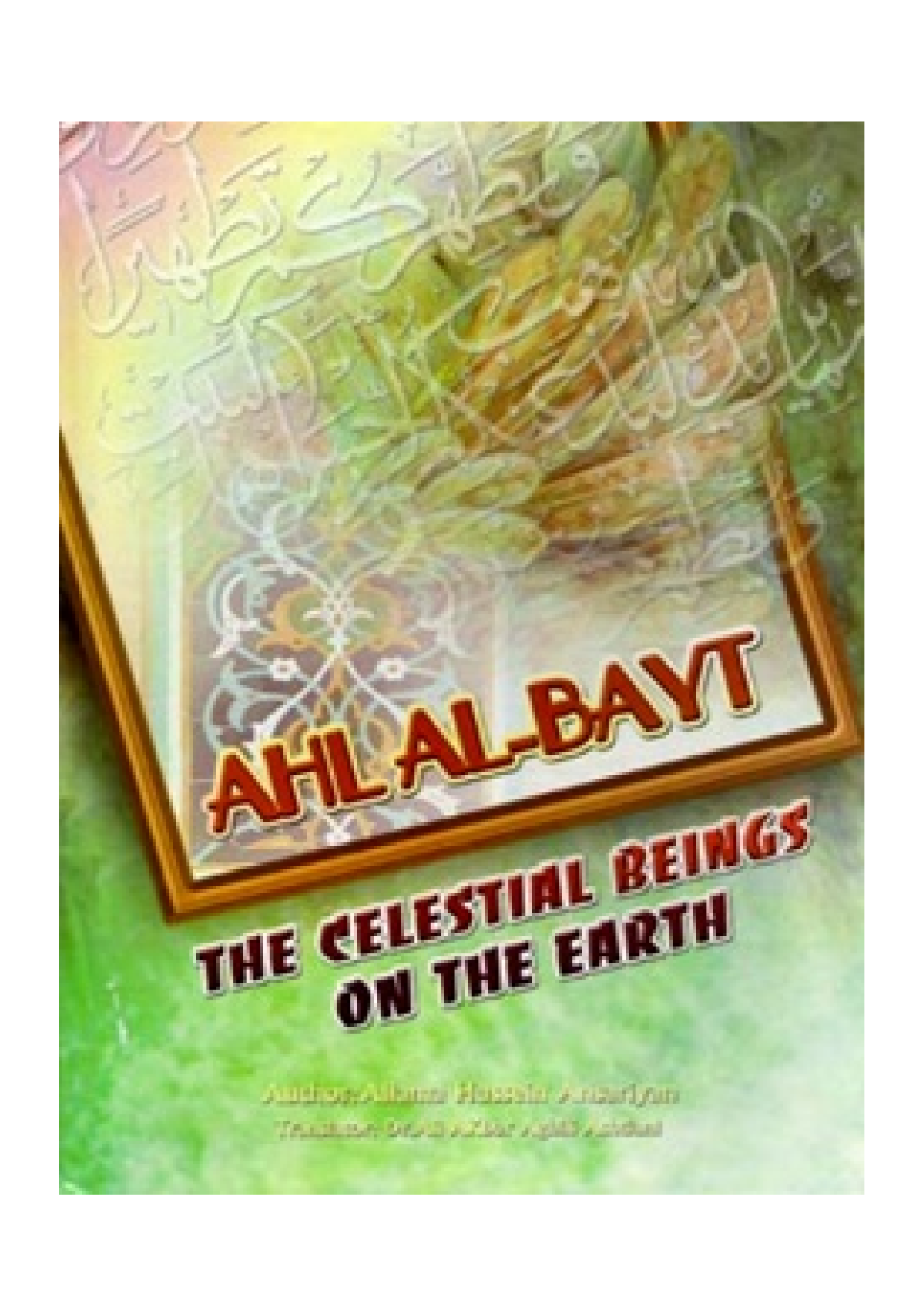
Ahlulbayt (as) The Celestial Beings On The Earth
In this book Hussain Ansariyan has presented The necessity of knowing the Ahlul Bayt and then goes on to define The Ahlul Bayt according to The Quran and Narrations. These narrations are drawn from both Shia and Sunni sources, including Bukhari that Sunnis regard as the most authentic after The Quran. Allama covers various aspects of Ahlal Bayt (as) demonstrating their superiority over all other creations and their rightful inheritance of the mantle of The Prophet (saw). After all, The Prophet (saw) declared in public that he left behind him two weighty things: The Book of Allah (swt) and his Itrah, The Ahlul Bayt (as). Thus to accept the Quran and reject the Ahlul Bayt is to reject The Prophet (saw) words. This book is a rendition of the truth as it is. The later sections of the book describes the generosity, kindness and help that our Aimmah (as) gave to Shia and non-Shia too, highlighting their traits of humility, affability and justice. The book also describes what it means to be a follower of the Ahlul Bayt (as), visiting their shrines, mourning over them and thanking Allah (swt) for the blessings of Ahlul Bayt (as). The book concludes with caution about exaggerating the status of Ahlul Bayt (as) or to try to reduce their status.
Published By:
Published Date:
June 15, 2026
Pages:
456
Subjects:
Available Format:
(2.57)
Action:
Description
In this book Hussain Ansariyan has presented The necessity of knowing the Ahlul Bayt and then goes on to define The Ahlul Bayt according to The Quran and Narrations. These narrations are drawn from both Shia and Sunni sources, including Bukhari that Sunnis regard as the most authentic after The Quran. Allama covers various aspects of Ahlal Bayt (as) demonstrating their superiority over all other creations and their rightful inheritance of the mantle of The Prophet (saw). After all, The Prophet (saw) declared in public that he left behind him two weighty things: The Book of Allah (swt) and his Itrah, The Ahlul Bayt (as). Thus to accept the Quran and reject the Ahlul Bayt is to reject The Prophet (saw) words. This book is a rendition of the truth as it is. The later sections of the book describes the generosity, kindness and help that our Aimmah (as) gave to Shia and non-Shia too, highlighting their traits of humility, affability and justice. The book also describes what it means to be a follower of the Ahlul Bayt (as), visiting their shrines, mourning over them and thanking Allah (swt) for the blessings of Ahlul Bayt (as). The book concludes with caution about exaggerating the status of Ahlul Bayt (as) or to try to reduce their status.