

Al affaf ala mazbah tabraj volume 1
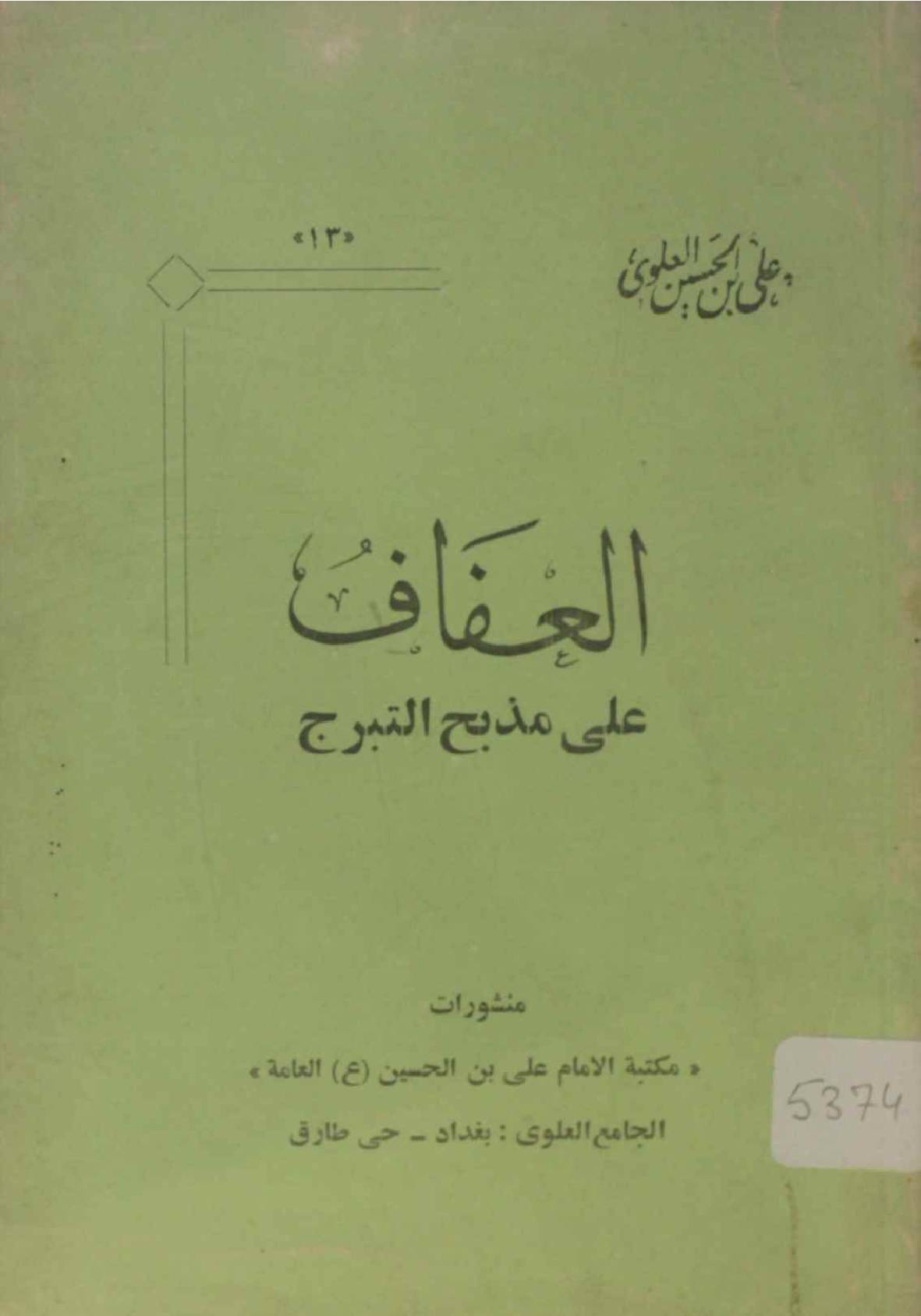
The book Afaff ala Mazbah Tabraj by Ali Ibn al-Hussain Alvi explores the concept of iffat (chastity) in the context of Muslim women. In Islam, chastity is not only a personal value but also a social virtue that influences one's relationships and interactions with others. For Muslim women, chastity encompasses modesty, purity, and the preservation of dignity, both in private and public spheres. Chastity, in this context, means refraining from any actions or behaviors that could compromise one’s moral integrity, such as engaging in illicit relationships or dressing immodestly. It is viewed as an act of self-respect, honoring one's body as a gift from Allah. The concept of chastity for Muslim women also extends to modesty in behavior, speech, and interactions with others. The author delves into how the Islamic teachings guide women to uphold these values, highlighting the role of chastity in shaping a virtuous and dignified life, while reflecting the broader societal expectation of moral conduct and social responsibility. Through this, Muslim women are encouraged to live a life that aligns with Islamic principles, fostering both personal growth and contributing to the well-being of society.
Published By:
Published Date:
June 15, 2026
Pages:
104
Subjects:
Available Format:
(6.63)
Action:
Description
The book Afaff ala Mazbah Tabraj by Ali Ibn al-Hussain Alvi explores the concept of iffat (chastity) in the context of Muslim women. In Islam, chastity is not only a personal value but also a social virtue that influences one's relationships and interactions with others. For Muslim women, chastity encompasses modesty, purity, and the preservation of dignity, both in private and public spheres. Chastity, in this context, means refraining from any actions or behaviors that could compromise one’s moral integrity, such as engaging in illicit relationships or dressing immodestly. It is viewed as an act of self-respect, honoring one's body as a gift from Allah. The concept of chastity for Muslim women also extends to modesty in behavior, speech, and interactions with others. The author delves into how the Islamic teachings guide women to uphold these values, highlighting the role of chastity in shaping a virtuous and dignified life, while reflecting the broader societal expectation of moral conduct and social responsibility. Through this, Muslim women are encouraged to live a life that aligns with Islamic principles, fostering both personal growth and contributing to the well-being of society.