


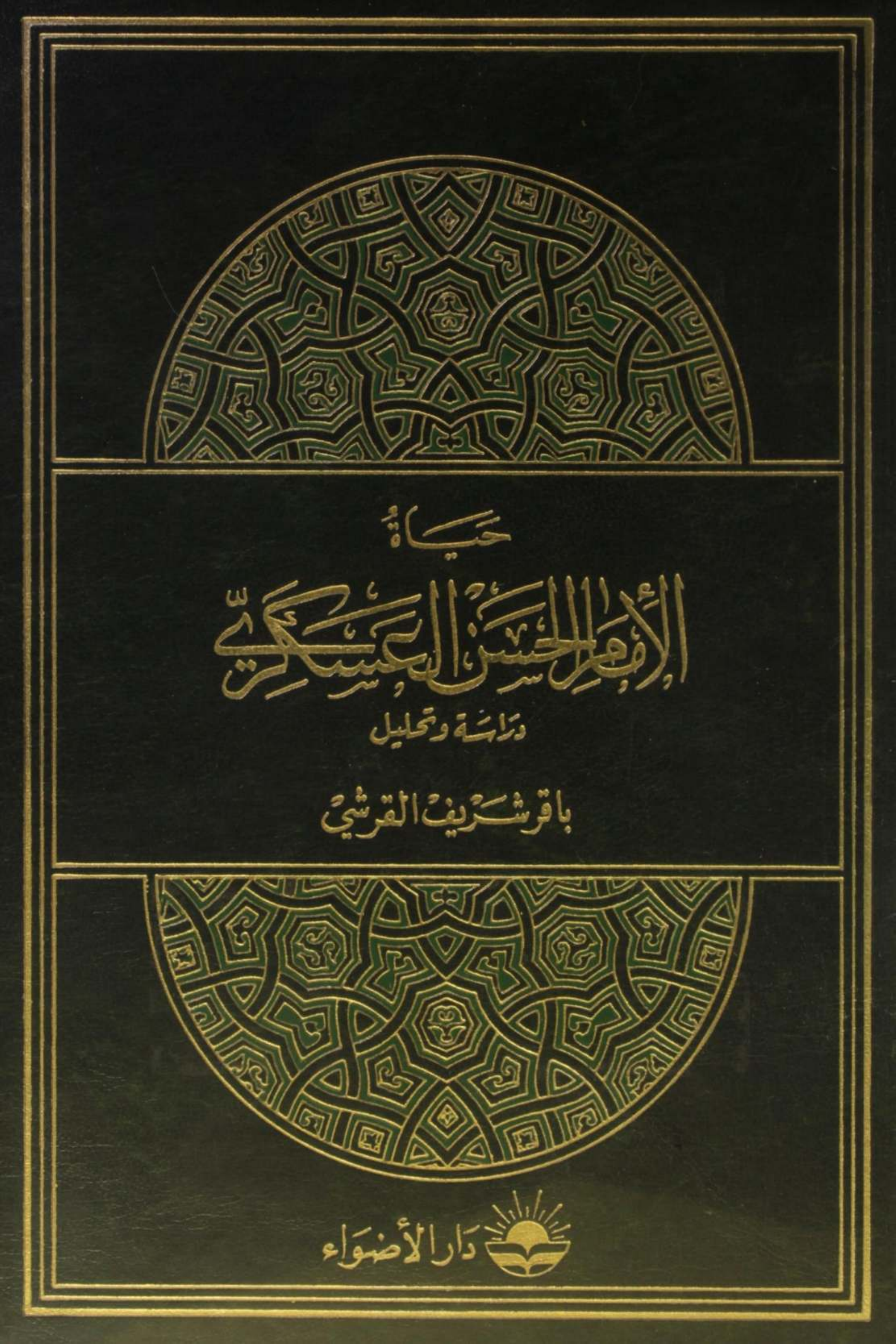
Hayat Imam Hassan Askari as
This book "Hayat Imam Hassan Al Askari as" is a complete introduction of the life of Imam Al Askari as, the 11th of the twelve Shia Imam. This book is written by Baqir Shareef Quraishi. Hasan al-Askari (Arabic: الحَسَن بْن عَلِيّ ٱلْعَسْكَرِيّ, romanized: al-Ḥasan ibn ʿAlī al-ʿAskarī; c. 844–874) was a descendant of the Islamic prophet Muhammad. He is regarded as the eleventh of the Twelve Imams, succeeding his father, Ali al-Hadi. Hasan Al-Askari was born in Medina in 844 and brought with his father to the garrison town of Samarra in 848, where the Abbasid caliphs held them under close surveillance until their deaths, even though neither were politically active. After the death of al-Hadi in 868, the majority of his following acknowledged his son, al-Askari, as their next Imam. Al-Askari's contact with the Shia population was restricted by the caliphs and instead, he communicated with his followers through a network of representatives. He died in Samarra in 873–874 at the age of about twenty-eight and was buried in the family home next to his father, which later developed into al-Askari shrine, a major center for Shia pilgrimage.
Published By:
Published Date:
June 15, 2026
Pages:
293
Subjects:
Available Format:
(26.52)
Action:
Description
This book "Hayat Imam Hassan Al Askari as" is a complete introduction of the life of Imam Al Askari as, the 11th of the twelve Shia Imam. This book is written by Baqir Shareef Quraishi. Hasan al-Askari (Arabic: الحَسَن بْن عَلِيّ ٱلْعَسْكَرِيّ, romanized: al-Ḥasan ibn ʿAlī al-ʿAskarī; c. 844–874) was a descendant of the Islamic prophet Muhammad. He is regarded as the eleventh of the Twelve Imams, succeeding his father, Ali al-Hadi. Hasan Al-Askari was born in Medina in 844 and brought with his father to the garrison town of Samarra in 848, where the Abbasid caliphs held them under close surveillance until their deaths, even though neither were politically active. After the death of al-Hadi in 868, the majority of his following acknowledged his son, al-Askari, as their next Imam. Al-Askari's contact with the Shia population was restricted by the caliphs and instead, he communicated with his followers through a network of representatives. He died in Samarra in 873–874 at the age of about twenty-eight and was buried in the family home next to his father, which later developed into al-Askari shrine, a major center for Shia pilgrimage.