


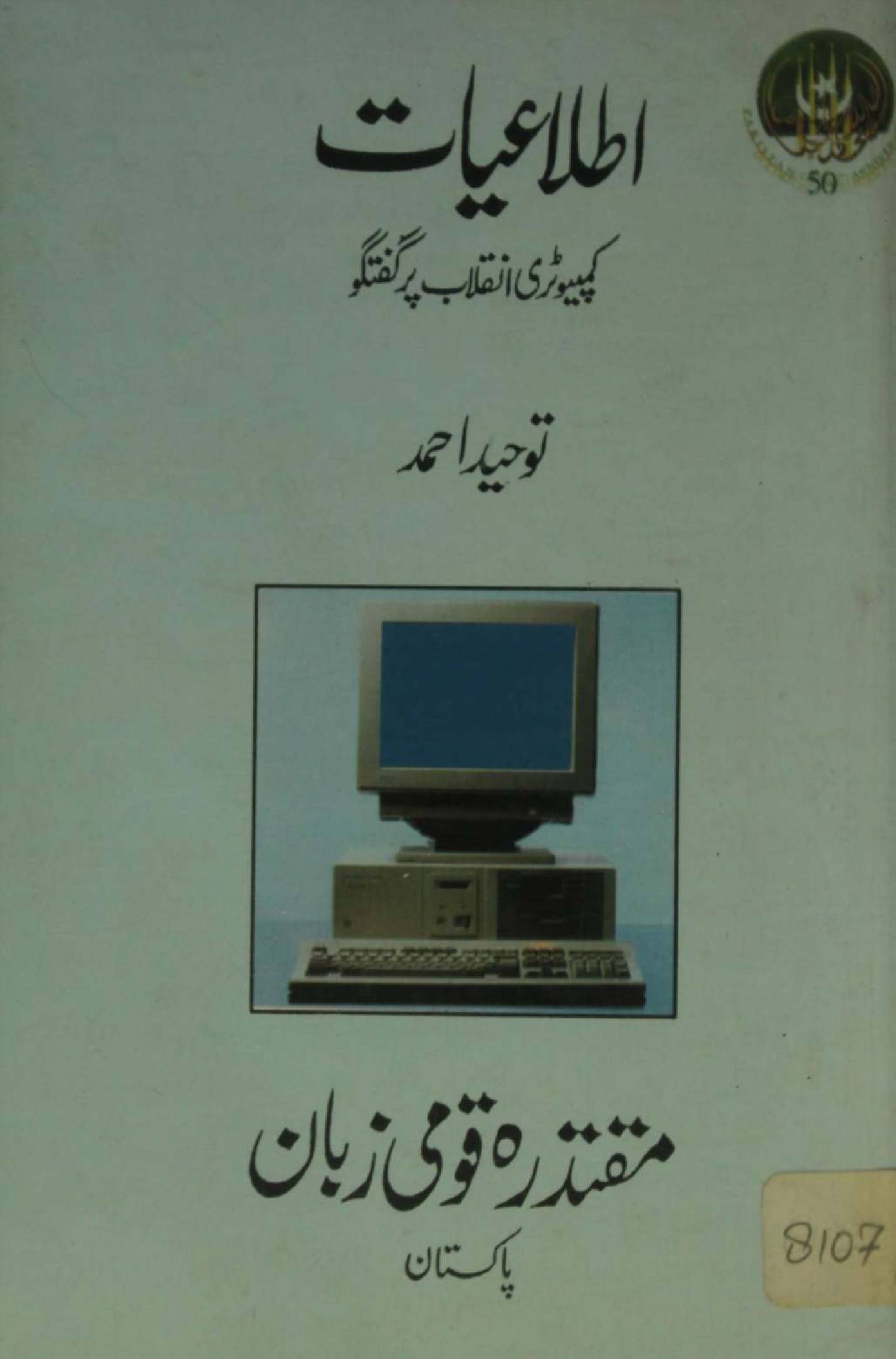
Itlaa'iyaat
“Itlayiaat” by Tauheed Ahmad traces the journey of computers—from early mechanical aids to today’s digital marvels and anticipates tomorrow’s AI‑driven systems. The narrative begins with ancient tools like the abacus and slide rule, advancing through Charles Babbage’s 19th‑century mechanical engines, setting the stage . Ahmad explores the vacuum‑tube era of the 1940s (ENIAC), then the transistor revolution in the 1950s, which brought size reduction, enhanced speed, and reliability . Next comes integrated circuits in the 1960s–70s, enabling mainframes and minicomputers, followed by microprocessor‑based personal systems from the 1970s onward . The final section focuses on the modern revolution: networking, graphical interfaces, ubiquitous laptops, the Internet, and the emerging fifth‑generation era of AI and intelligent computing . Ahmad’s engaging overview blends history, technical evolution, and forward‑looking insight into how computers have transformed society and hint at where they’re heading next.
Published By:
Published Date:
June 15, 2026
Pages:
104
Subjects:
Available Format:
(30.71)
Action:
Description
“Itlayiaat” by Tauheed Ahmad traces the journey of computers—from early mechanical aids to today’s digital marvels and anticipates tomorrow’s AI‑driven systems. The narrative begins with ancient tools like the abacus and slide rule, advancing through Charles Babbage’s 19th‑century mechanical engines, setting the stage . Ahmad explores the vacuum‑tube era of the 1940s (ENIAC), then the transistor revolution in the 1950s, which brought size reduction, enhanced speed, and reliability . Next comes integrated circuits in the 1960s–70s, enabling mainframes and minicomputers, followed by microprocessor‑based personal systems from the 1970s onward . The final section focuses on the modern revolution: networking, graphical interfaces, ubiquitous laptops, the Internet, and the emerging fifth‑generation era of AI and intelligent computing . Ahmad’s engaging overview blends history, technical evolution, and forward‑looking insight into how computers have transformed society and hint at where they’re heading next.