


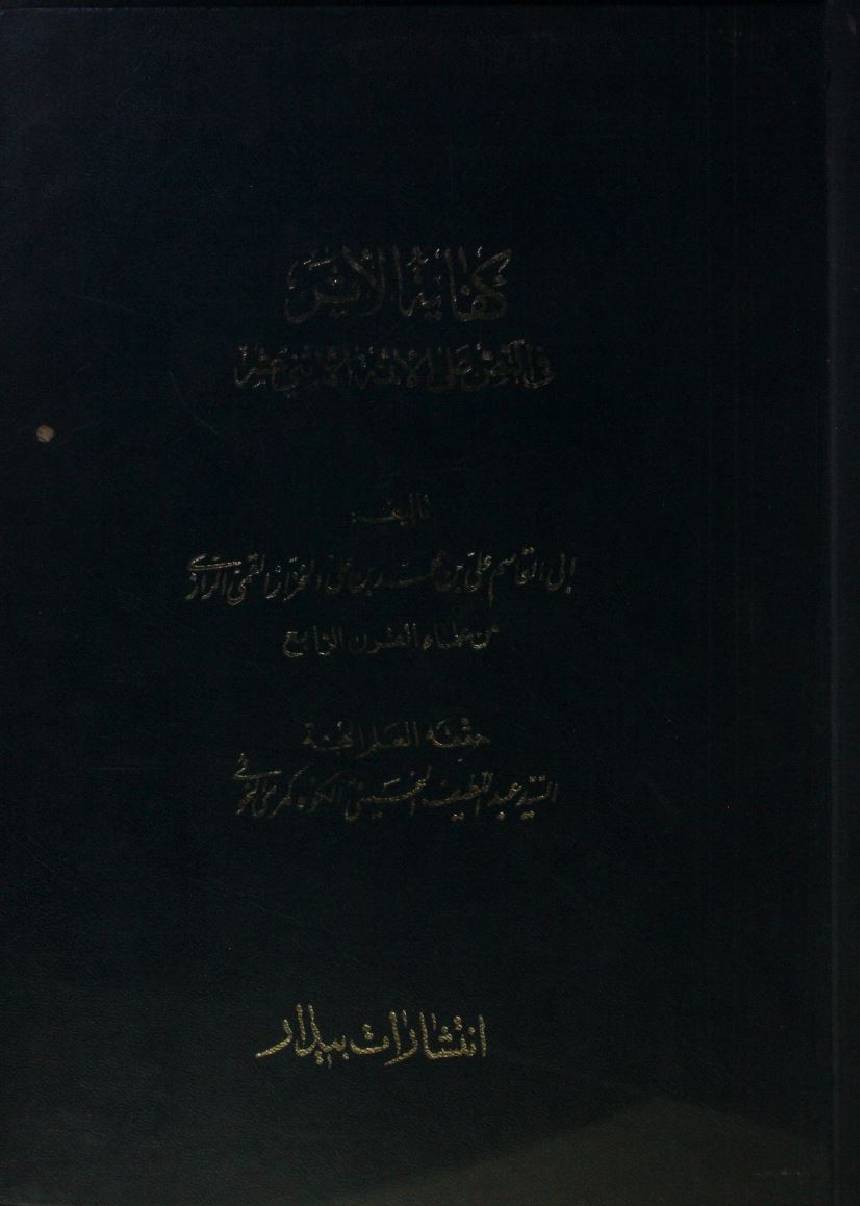
Kafayat al Aser, fi nass al Aaima Al ithna ashari
The author of this book " Kafayat al aser fi nus al Aaima Al ithna ashari" is Abi Qasim Ali bin Muhammad bin Ali Al Khazaz al Qummi. The term ithna ashari refers to the twelve divinely ordained leaders, known as the Twelve Imams, amongst them last Imam, Imam al-Mahdi as, lives in Occultation and will reappear as the promised Mahdi. The Twelve Imams are the spiritual and political successors to the Islamic prophet Muhammad saww. According to the theology of Twelvers, the Twelve Imams are exemplary human individuals who not only rule over the Muslim community (Ummah) with justice, but are also able to preserve and interpret the Islamic law (sharīʿa) and the esoteric meaning of the Quran. The words and deeds (sunnah) of Muhammad saww and the Imams are a guide and model for the Muslim community to follow; as a result, Muhammad and the Imams must be free from error and sin, a doctrine known as Ismah or infallibility, and must be chosen by divine decree.
Published By:
Published Date:
June 15, 2026
Pages:
380
Subjects:
Available Format:
(27.77)
Action:
Description
The author of this book " Kafayat al aser fi nus al Aaima Al ithna ashari" is Abi Qasim Ali bin Muhammad bin Ali Al Khazaz al Qummi. The term ithna ashari refers to the twelve divinely ordained leaders, known as the Twelve Imams, amongst them last Imam, Imam al-Mahdi as, lives in Occultation and will reappear as the promised Mahdi. The Twelve Imams are the spiritual and political successors to the Islamic prophet Muhammad saww. According to the theology of Twelvers, the Twelve Imams are exemplary human individuals who not only rule over the Muslim community (Ummah) with justice, but are also able to preserve and interpret the Islamic law (sharīʿa) and the esoteric meaning of the Quran. The words and deeds (sunnah) of Muhammad saww and the Imams are a guide and model for the Muslim community to follow; as a result, Muhammad and the Imams must be free from error and sin, a doctrine known as Ismah or infallibility, and must be chosen by divine decree.