


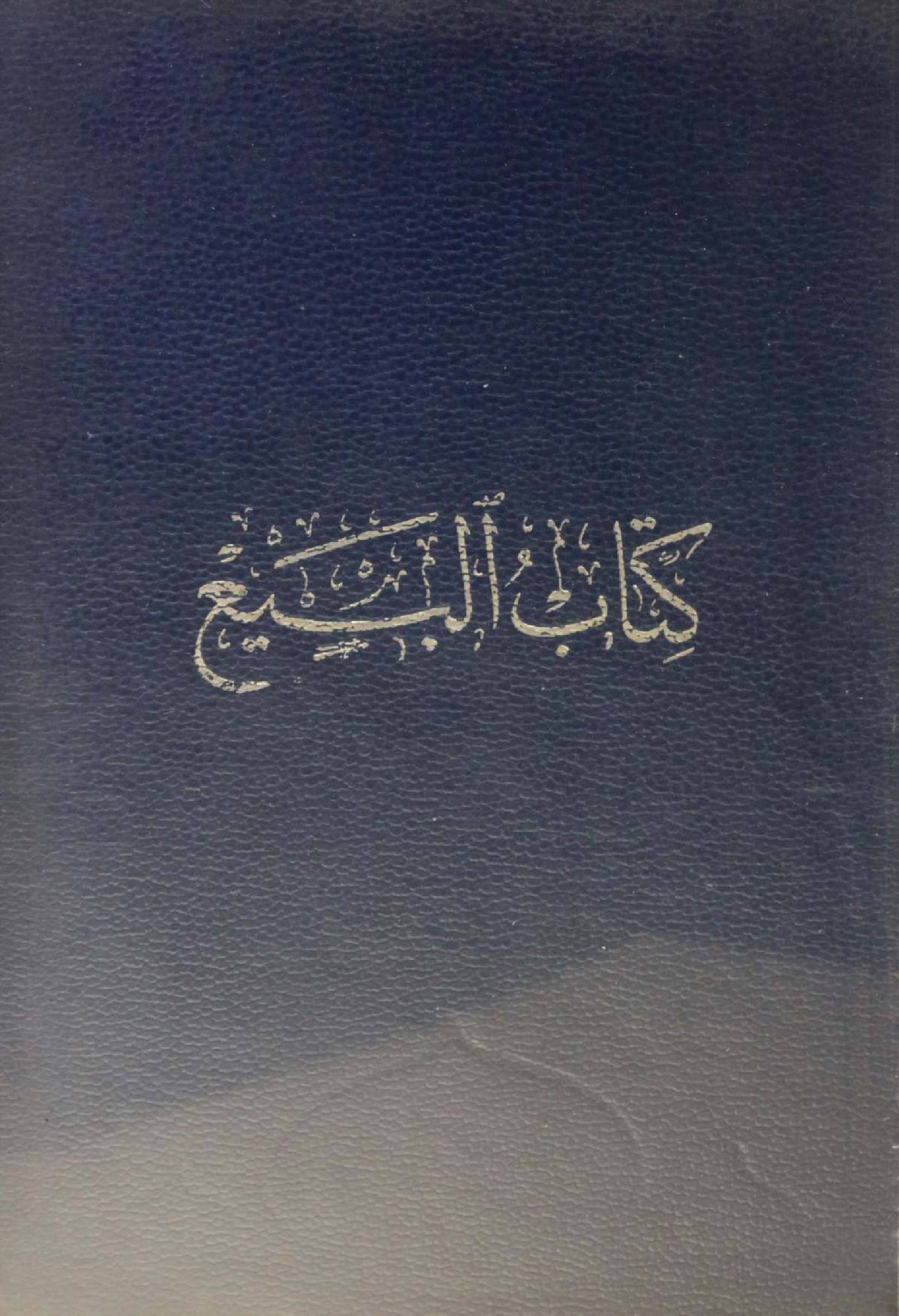
Kitab al-Bay volume 4
This book, Kitab al-Bay‘, is a multi-volume collection of advanced jurisprudential discourses delivered by Imam Khomeini at the Najaf Theological School between the years 1385–1392 AH (1965–1971 CE). Written in Arabic, it reflects Khomeini's deep engagement with the intricate principles of Islamic commercial law, particularly the rules governing sale (bay‘). The work forms part of his dars-e kharij teachings, the highest level of Shi‘a seminary education, where students learn to exercise independent legal reasoning. In these volumes, Khomeini meticulously analyzes classical positions from earlier jurists, engages in detailed critique, and offers his own jurisprudential insights on topics such as the conditions of valid transactions, mutual consent, types of goods, prohibited practices like usury (riba) and uncertainty (gharar), and the moral implications of economic behavior. Though primarily focused on legal-commercial matters, the discourse subtly reflects Khomeini’s broader ethical and political concerns, particularly his emphasis on justice, equity, and the social responsibilities of Muslims. Delivered during his exile in Najaf, this work not only highlights his scholarly authority but also foreshadows elements of the political philosophy he would later develop more explicitly in his theory of Wilayat al-Faqih.
Published By:
Published Date:
June 15, 2026
Pages:
487
Subjects:
Available Format:
(65.82)
Action:
Description
This book, Kitab al-Bay‘, is a multi-volume collection of advanced jurisprudential discourses delivered by Imam Khomeini at the Najaf Theological School between the years 1385–1392 AH (1965–1971 CE). Written in Arabic, it reflects Khomeini's deep engagement with the intricate principles of Islamic commercial law, particularly the rules governing sale (bay‘). The work forms part of his dars-e kharij teachings, the highest level of Shi‘a seminary education, where students learn to exercise independent legal reasoning. In these volumes, Khomeini meticulously analyzes classical positions from earlier jurists, engages in detailed critique, and offers his own jurisprudential insights on topics such as the conditions of valid transactions, mutual consent, types of goods, prohibited practices like usury (riba) and uncertainty (gharar), and the moral implications of economic behavior. Though primarily focused on legal-commercial matters, the discourse subtly reflects Khomeini’s broader ethical and political concerns, particularly his emphasis on justice, equity, and the social responsibilities of Muslims. Delivered during his exile in Najaf, this work not only highlights his scholarly authority but also foreshadows elements of the political philosophy he would later develop more explicitly in his theory of Wilayat al-Faqih.