


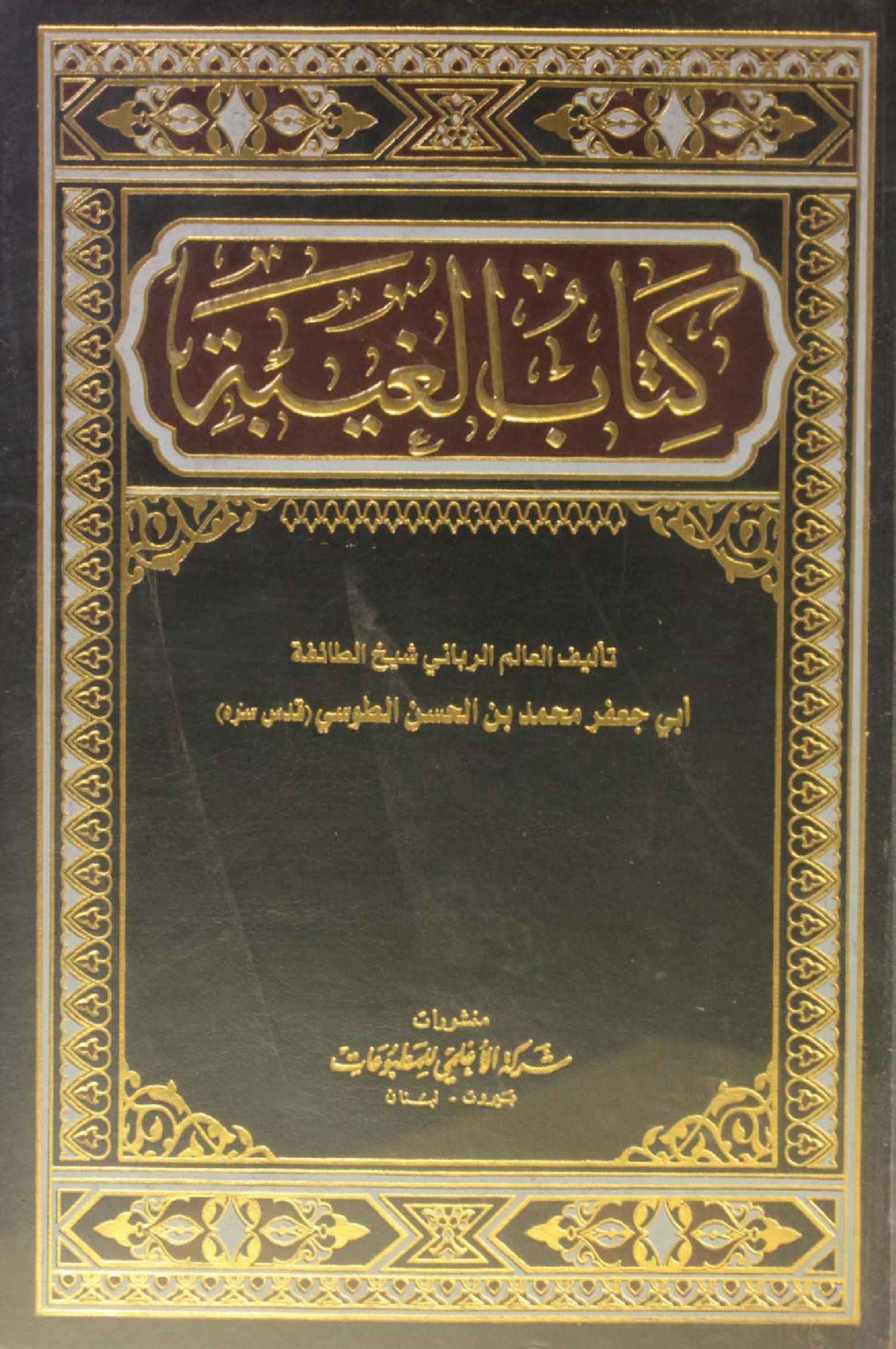
Kitab al Ghaiba
Kitāb al-Ghayba (Arabic: کِتاب الغَيبَة), is the title of a book about the occultation of Imam al-Mahdi (a) written by Abu Ja'far Muhammad b. Hasan al-Tusi known as al-Shaykh al-Tusi. This book is among important references for knowing Imam al-Mahdi (a) and his occultation. It has offered the view of Shi'a about Imam al-Mahdi (a) and has answered questions posed about his occultation using justifications from the Qur'an, hadiths and reason. Kitāb al-Ghayba by Shaykh al-Tusi is a foundational Shi'a text exploring the occultation (ghayba) of Imam al-Mahdi (a), the twelfth Imam in Twelver Shi'ism. Written in the 11th century, the book addresses theological and historical questions surrounding the Imam’s disappearance, defending the concept against skeptics and clarifying its spiritual significance. It compiles narrations, rational arguments, and scholarly analysis to affirm that the occultation is a divinely ordained phase before the Imam’s eventual reappearance. Al-Tusi also refutes doubts raised by opponents and provides guidance for the Shi’a community on how to maintain religious practice and belief during the Imam’s hidden era, making it a cornerstone of Shi’a eschatological literature.
Published By:
Published Date:
June 15, 2026
Pages:
303
Subjects:
Available Format:
(39.43)
Action:
Description
Kitāb al-Ghayba (Arabic: کِتاب الغَيبَة), is the title of a book about the occultation of Imam al-Mahdi (a) written by Abu Ja'far Muhammad b. Hasan al-Tusi known as al-Shaykh al-Tusi. This book is among important references for knowing Imam al-Mahdi (a) and his occultation. It has offered the view of Shi'a about Imam al-Mahdi (a) and has answered questions posed about his occultation using justifications from the Qur'an, hadiths and reason. Kitāb al-Ghayba by Shaykh al-Tusi is a foundational Shi'a text exploring the occultation (ghayba) of Imam al-Mahdi (a), the twelfth Imam in Twelver Shi'ism. Written in the 11th century, the book addresses theological and historical questions surrounding the Imam’s disappearance, defending the concept against skeptics and clarifying its spiritual significance. It compiles narrations, rational arguments, and scholarly analysis to affirm that the occultation is a divinely ordained phase before the Imam’s eventual reappearance. Al-Tusi also refutes doubts raised by opponents and provides guidance for the Shi’a community on how to maintain religious practice and belief during the Imam’s hidden era, making it a cornerstone of Shi’a eschatological literature.