

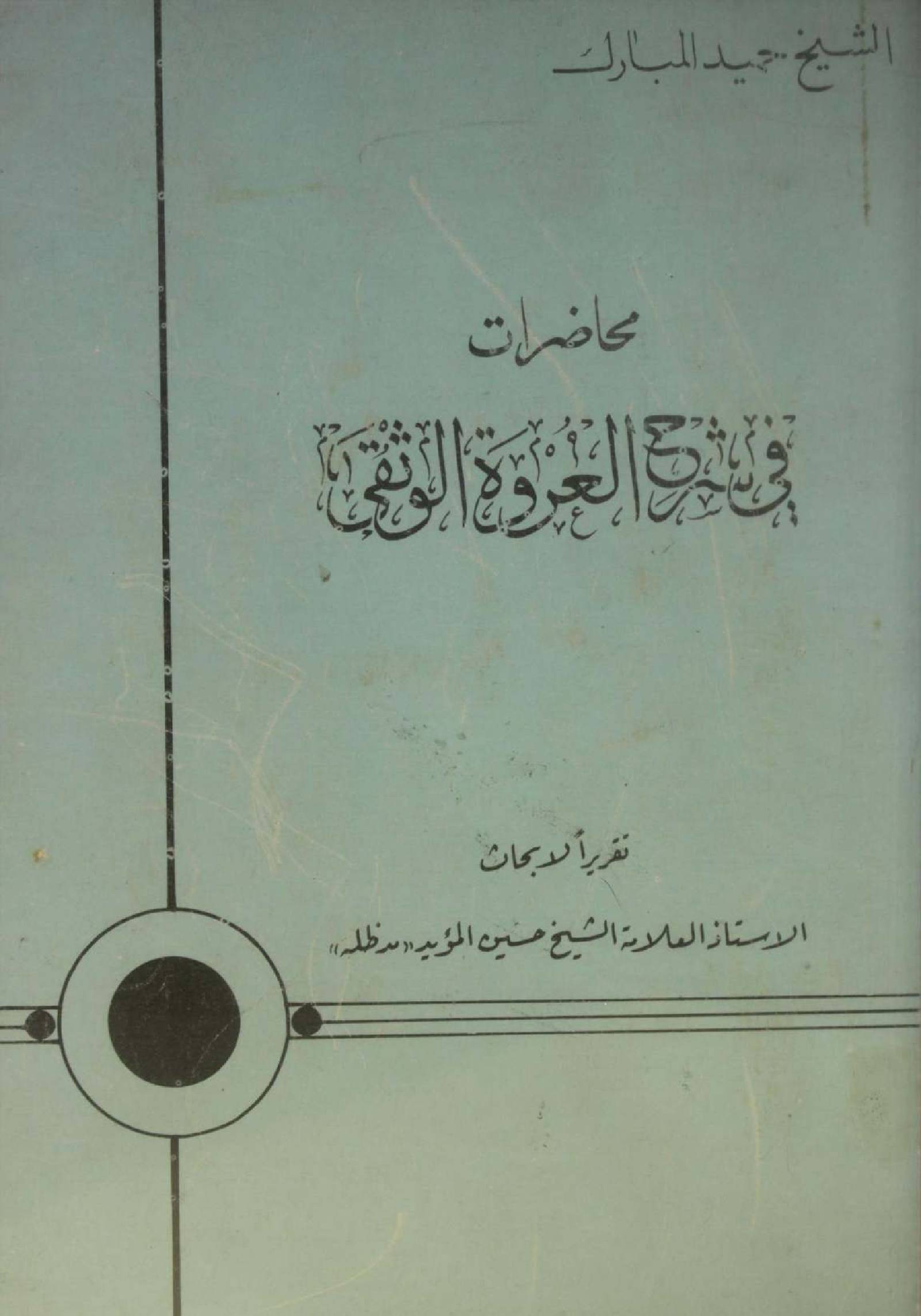
Mahazarat fi sharh Urwa-tul-wuthqa
The word "mahazarat" (محضرات) in the phrase "mahazarat fil ‘urwatul wuthqa" means sessions of learning or lessons. This book basically covers the lesson from the book " Urwa-tul-wuthqa." Al-ʿUrwa al-wuthqā (Arabic: العُروَة الوُثقی) is a jurisprudential book which is written in Arabic by Sayyid Muhammad Kazim Tabataba'i al-Yazdi, one of the greatest jurists of Shi'a in the fourteenth/twentieth century. The book is also known as al-'Urwa. The book has seventeen jurisprudential chapters. Beginning of the book is about ijtihad (being able to give a scholarly opinion on religious law) and taqlid (following a religious authority) and it contains seventy two problems which discuss about different aspects of the issue. Next chapters are about 'ibadiyyat (worshipings) like tahara (cleansing), prayer, fasting, i'tikaf, khums (religious tax), hajj (pilgrimage of mecca) zakat (religious tax) and in the next chapters it discusses about mu'amilat (dealings) like rent, mudariba (limited partnership), shirkat (contribution), muzari'a , musaqat, daman (guarantee), hawala (transfer), marriage, wasiyya (testament).
Published By:
Published Date:
June 15, 2026
Pages:
248
Subjects:
Available Format:
(31.45)
Action:
Description
The word "mahazarat" (محضرات) in the phrase "mahazarat fil ‘urwatul wuthqa" means sessions of learning or lessons. This book basically covers the lesson from the book " Urwa-tul-wuthqa." Al-ʿUrwa al-wuthqā (Arabic: العُروَة الوُثقی) is a jurisprudential book which is written in Arabic by Sayyid Muhammad Kazim Tabataba'i al-Yazdi, one of the greatest jurists of Shi'a in the fourteenth/twentieth century. The book is also known as al-'Urwa. The book has seventeen jurisprudential chapters. Beginning of the book is about ijtihad (being able to give a scholarly opinion on religious law) and taqlid (following a religious authority) and it contains seventy two problems which discuss about different aspects of the issue. Next chapters are about 'ibadiyyat (worshipings) like tahara (cleansing), prayer, fasting, i'tikaf, khums (religious tax), hajj (pilgrimage of mecca) zakat (religious tax) and in the next chapters it discusses about mu'amilat (dealings) like rent, mudariba (limited partnership), shirkat (contribution), muzari'a , musaqat, daman (guarantee), hawala (transfer), marriage, wasiyya (testament).