

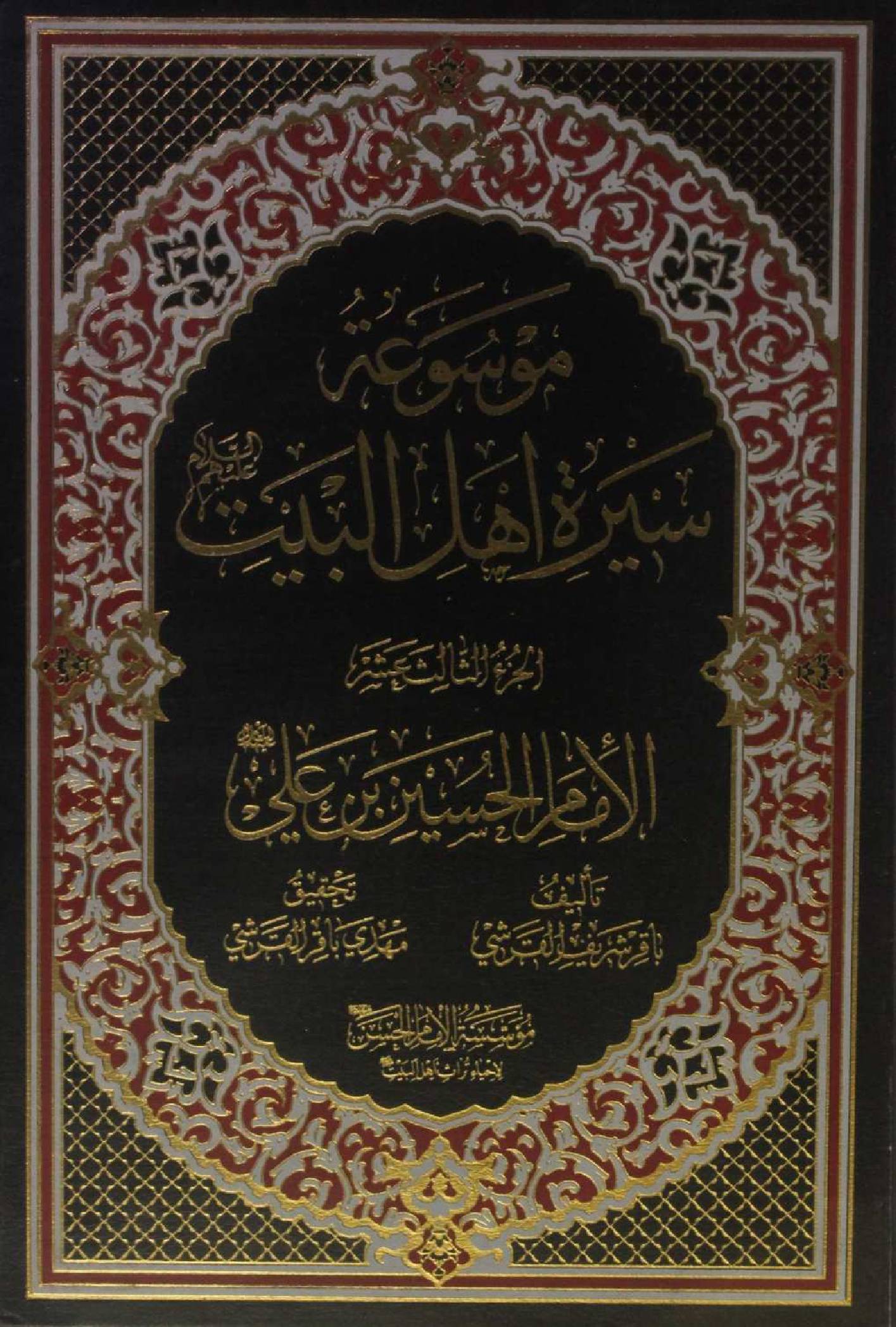
Mausuʾat Sīrat Ahl al‑Bayt (AS) Volume 13 Imam Hussain Ibne Abi as
“Mausuʾat Sīrat Ahl al‑Bayt (AS)” by Baqir Sharif al‑Qurashi is a comprehensive biographical encyclopedia that deeply explores the lives of the Prophet Muhammad ﷺ and the Fourteen Infallibles of his household (Ahl al-Bayt). Drawing on a wide range of reliable Islamic sources and tradition, the author reconstructs not only historical events, but also the spiritual, intellectual, and moral dimensions of each of these personalities. The work presents the genealogical background, the social and political contexts in which they lived, and delves into their teachings, wisdom, and the challenges they faced. Al‑Qurashi’s narrative is scholarly yet accessible, emphasizing how the Ahl al-Bayt served as both spiritual exemplars and custodians of religious knowledge. He chronicles key moments — such as the Imams’ struggles, debates, and contributions to theology, jurisprudence, and ethics — demonstrating their enduring influence on the development of Shia thought. Throughout, the book underscores the idea that the Ahl al-Bayt’s mission was not only temporal but deeply sacred: they carried forward divine guidance, preserved prophetic heritage, and upheld justice. Ultimately, this encyclopedia stands as a vital resource for anyone seeking to understand the lives, virtues, and legacy of the Prophet’s household, woven together in a rich tapestry of history, faith, and scholarship. This volume provides a detailed account of the life, teachings, and legacy of Imam Hussain Ibne Ali as
Published By:
Published Date:
June 15, 2026
Pages:
479
Subjects:
Available Format:
(54.8)
Action:
Description
“Mausuʾat Sīrat Ahl al‑Bayt (AS)” by Baqir Sharif al‑Qurashi is a comprehensive biographical encyclopedia that deeply explores the lives of the Prophet Muhammad ﷺ and the Fourteen Infallibles of his household (Ahl al-Bayt). Drawing on a wide range of reliable Islamic sources and tradition, the author reconstructs not only historical events, but also the spiritual, intellectual, and moral dimensions of each of these personalities. The work presents the genealogical background, the social and political contexts in which they lived, and delves into their teachings, wisdom, and the challenges they faced. Al‑Qurashi’s narrative is scholarly yet accessible, emphasizing how the Ahl al-Bayt served as both spiritual exemplars and custodians of religious knowledge. He chronicles key moments — such as the Imams’ struggles, debates, and contributions to theology, jurisprudence, and ethics — demonstrating their enduring influence on the development of Shia thought. Throughout, the book underscores the idea that the Ahl al-Bayt’s mission was not only temporal but deeply sacred: they carried forward divine guidance, preserved prophetic heritage, and upheld justice. Ultimately, this encyclopedia stands as a vital resource for anyone seeking to understand the lives, virtues, and legacy of the Prophet’s household, woven together in a rich tapestry of history, faith, and scholarship. This volume provides a detailed account of the life, teachings, and legacy of Imam Hussain Ibne Ali as