

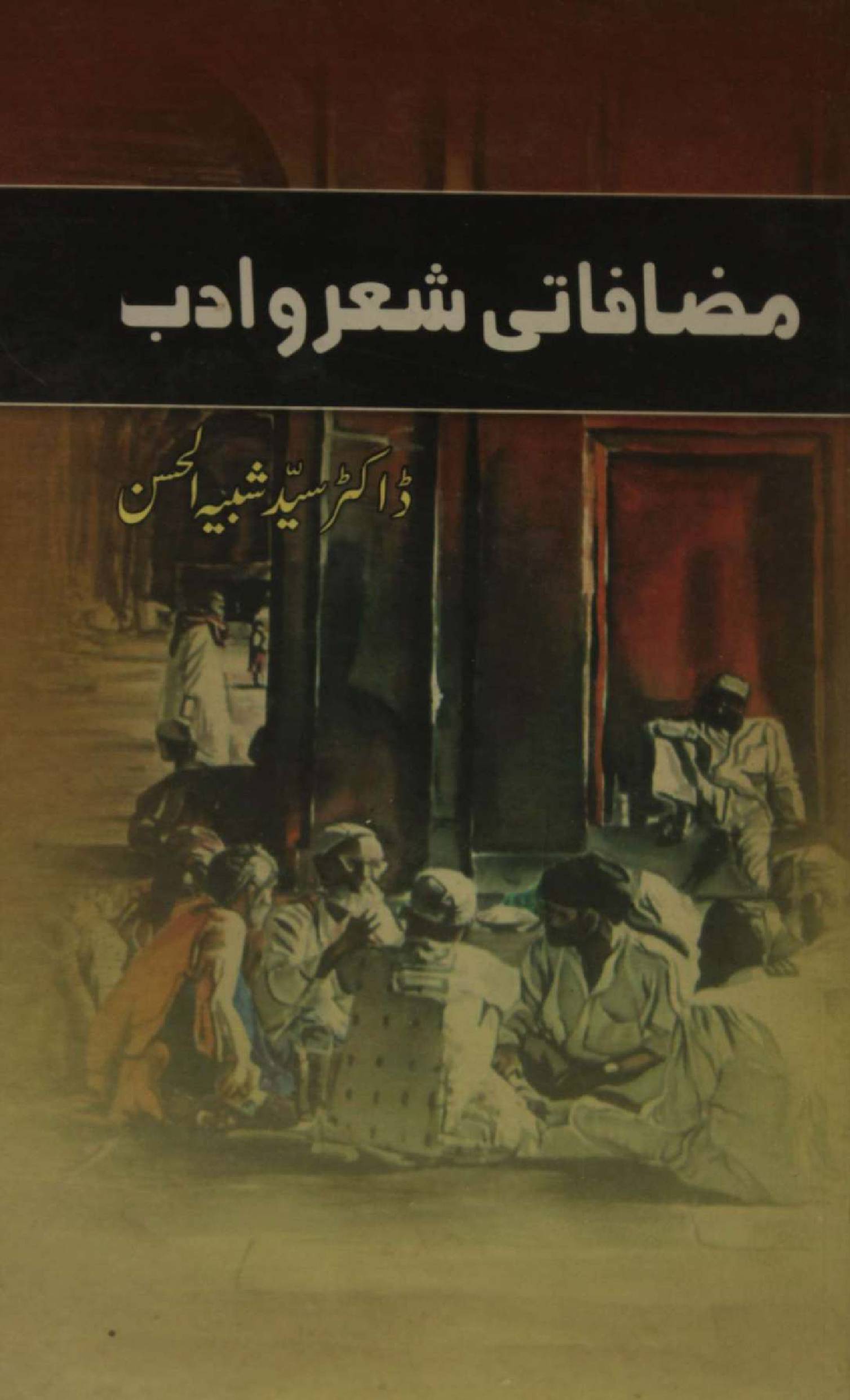
Mazafati shair O adab
Mazafati Shair o Adab" by Dr. Shabih ul Hassan is a profound literary exploration of the deeper, often overlooked dimensions of Urdu poetry and literature. In this book, the author reflects on the complex, layered nature of literary expression, describing mazafaat (subtleties, implications, and deeper meanings) as essential elements that elevate literature beyond surface-level reading. He emphasizes how cities like Delhi, Lucknow, and Lahore have historically been centers of such literary sophistication. Dr. Shabih argues that true poetic and literary greatness lies not just in eloquence or rhyme, but in the emotional, intellectual, and philosophical depth that a piece can convey. He critiques the conventional, superficial appreciation of literature and calls for a more nuanced engagement with texts—one that uncovers hidden meanings and emotional truths. The book likely includes analysis, critique, and examples from classical and modern Urdu works to support this perspective.
Published By:
Published Date:
June 15, 2026
Pages:
374
Subjects:
Available Format:
(64.64)
Action:
Description
Mazafati Shair o Adab" by Dr. Shabih ul Hassan is a profound literary exploration of the deeper, often overlooked dimensions of Urdu poetry and literature. In this book, the author reflects on the complex, layered nature of literary expression, describing mazafaat (subtleties, implications, and deeper meanings) as essential elements that elevate literature beyond surface-level reading. He emphasizes how cities like Delhi, Lucknow, and Lahore have historically been centers of such literary sophistication. Dr. Shabih argues that true poetic and literary greatness lies not just in eloquence or rhyme, but in the emotional, intellectual, and philosophical depth that a piece can convey. He critiques the conventional, superficial appreciation of literature and calls for a more nuanced engagement with texts—one that uncovers hidden meanings and emotional truths. The book likely includes analysis, critique, and examples from classical and modern Urdu works to support this perspective.