


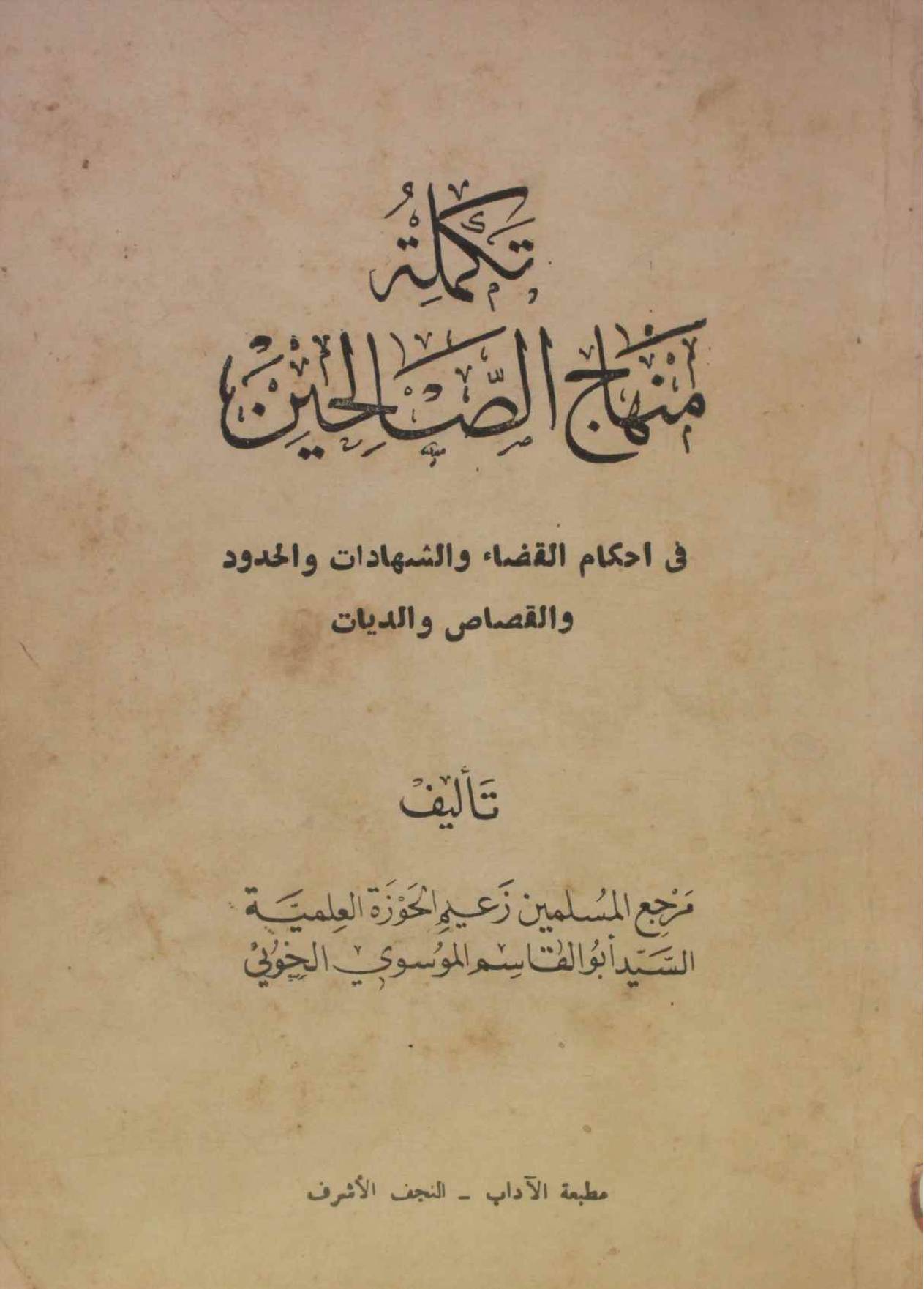
Minhaj al saleheen
"Minhaj al-Saleheen" is a significant work written by Ayatollah Syed Abul Qasim Moosvi Khui, a renowned Shi'a religious scholar and jurist. The book primarily deals with the religious rulings related to diyat (blood money) and qisas (retaliation or retribution). In Islamic jurisprudence, diyat refers to the compensation paid to the victim's family in cases of homicide or bodily harm, while qisas refers to the legal principle of retaliation, where the offender may face the same punishment as the harm they caused, subject to certain conditions. Ayatollah Khui's scholarship in this book is highly regarded for its depth and clarity, and it serves as an essential resource for understanding the legal and ethical principles that govern these important aspects of Islamic law. His authoritative insights help clarify the conditions under which diyat and qisas apply, providing valuable guidance to jurists, scholars, and students of Islamic law.
Published By:
Published Date:
June 15, 2026
Pages:
188
Subjects:
Available Format:
(20.64)
Action:
Description
"Minhaj al-Saleheen" is a significant work written by Ayatollah Syed Abul Qasim Moosvi Khui, a renowned Shi'a religious scholar and jurist. The book primarily deals with the religious rulings related to diyat (blood money) and qisas (retaliation or retribution). In Islamic jurisprudence, diyat refers to the compensation paid to the victim's family in cases of homicide or bodily harm, while qisas refers to the legal principle of retaliation, where the offender may face the same punishment as the harm they caused, subject to certain conditions. Ayatollah Khui's scholarship in this book is highly regarded for its depth and clarity, and it serves as an essential resource for understanding the legal and ethical principles that govern these important aspects of Islamic law. His authoritative insights help clarify the conditions under which diyat and qisas apply, providing valuable guidance to jurists, scholars, and students of Islamic law.