
 50
50 46
46 02
02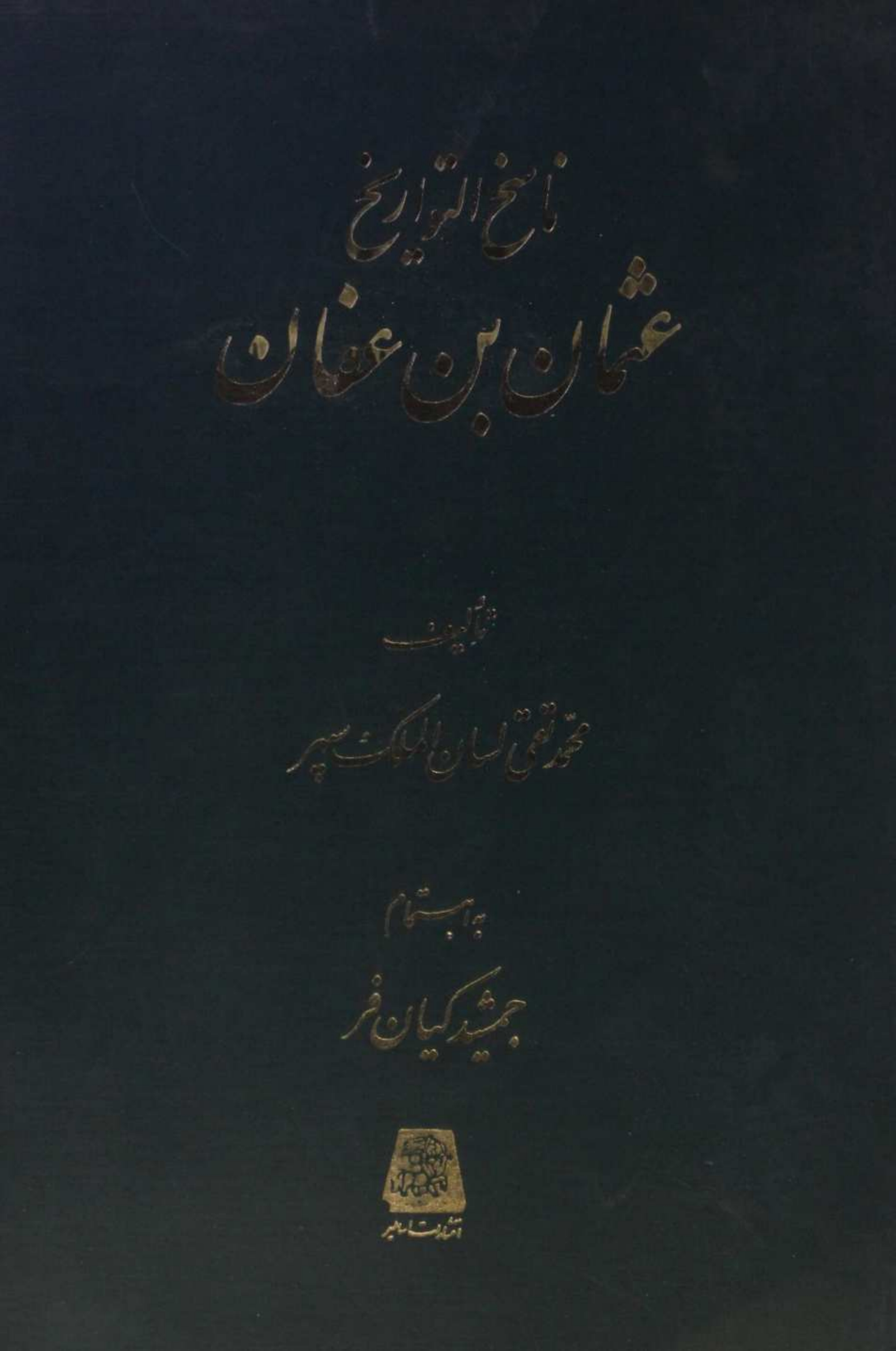
Nasikh al Tawarikh; Tareekh-e-khulafa ; Usman bin Affan
Nasikh al-Tawarikh is a Persian historical chronicle written by the 19th-century historian Mirza Muhammad Taqi Sepehr during the reign of Naser al-Din Shah Qajar in Qajar Iran. The work compiles earlier historical narratives and presents accounts of prominent personalities from early Islamic history. Among its sections is the biography of Uthman ibn Affan, a companion of Prophet Muhammad and the third caliph of the Muslim community. This section discusses the lineage and early life of Uthman in Mecca, his acceptance of Islam, and his close association with the Prophet. The narrative then describes his role within the early Muslim community and his reputation for generosity and wealth. The book further explains the circumstances that led to his caliphate after the death of Umar ibn al-Khattab, and outlines the major developments of his rule. It also discusses the administrative policies and growing political tensions during his leadership. The section concludes with the unrest in Medina, the events surrounding his assassination, and the broader consequences of these events for the Muslim community.
Published By:
Muhammed Taqi Sepehr
Published Date:
June 15, 2026
Pages:
267
Subjects:
Islamic History, Caliphate
Available Format:
(30.54)
Action:
Description
Nasikh al-Tawarikh is a Persian historical chronicle written by the 19th-century historian Mirza Muhammad Taqi Sepehr during the reign of Naser al-Din Shah Qajar in Qajar Iran. The work compiles earlier historical narratives and presents accounts of prominent personalities from early Islamic history. Among its sections is the biography of Uthman ibn Affan, a companion of Prophet Muhammad and the third caliph of the Muslim community. This section discusses the lineage and early life of Uthman in Mecca, his acceptance of Islam, and his close association with the Prophet. The narrative then describes his role within the early Muslim community and his reputation for generosity and wealth. The book further explains the circumstances that led to his caliphate after the death of Umar ibn al-Khattab, and outlines the major developments of his rule. It also discusses the administrative policies and growing political tensions during his leadership. The section concludes with the unrest in Medina, the events surrounding his assassination, and the broader consequences of these events for the Muslim community.