
 50
50 46
46 02
02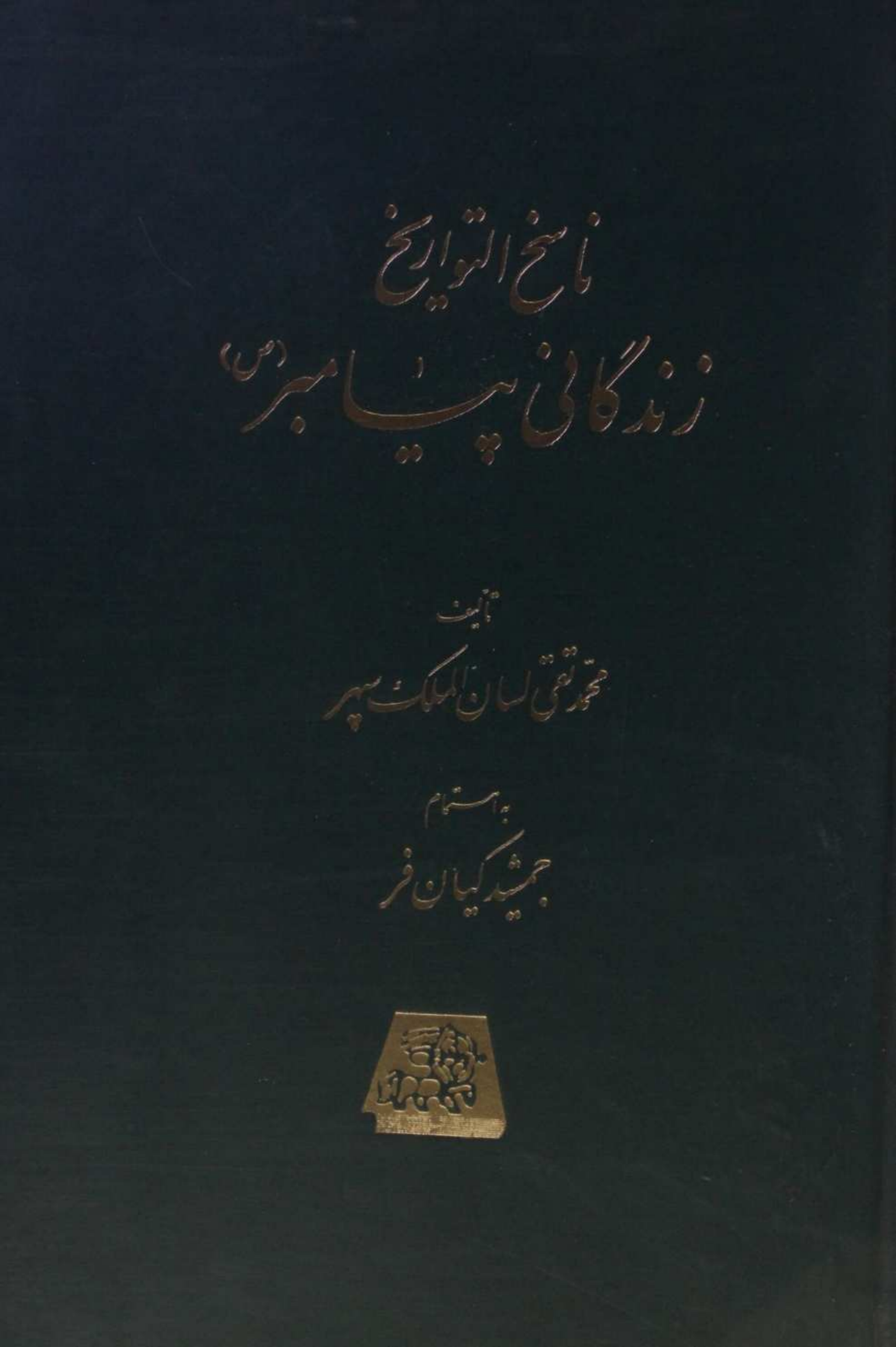
Nasikh al Tawarikh; Zindagani-e-Payamber 1
Nasikh al-Tawarikh was written by the Persian historian Mirza Muhammad Taqi Sepehr in the 19th century during the reign of Naser al-Din Shah Qajar in Qajar Iran. Sepehr served as a court historian and compiled this extensive Persian chronicle to document world and Islamic history by drawing on earlier historical works and traditional narratives. The section “Zindagani-e-Payambar” presents the biography of Prophet Muhammad and is organized into five main parts. It begins with a discussion of the Prophet’s noble lineage and family background, tracing his ancestry and the status of his tribe in Mecca. The next part describes his early life in Mecca, highlighting his character, upbringing, and the social and religious environment of Arabia before prophethood. The book then explains the beginning of revelation and the message of Islam, along with the hardships faced by the Prophet and the early Muslim community as they struggled against opposition. Another section focuses on the migration (Hijra) to Medina, where the Prophet established a new community and laid the foundations of the Islamic state. The final part discusses the later years of the Prophet, his passing, and the situation of the Muslim community and leadership issues that emerged after his demise.
Published By:
Muhammed Taqi Sepehr
Published Date:
June 15, 2026
Pages:
637
Subjects:
Islamic History, 14 Masoomeen (A.S)
Available Format:
(85.66)
Action:
Description
Nasikh al-Tawarikh was written by the Persian historian Mirza Muhammad Taqi Sepehr in the 19th century during the reign of Naser al-Din Shah Qajar in Qajar Iran. Sepehr served as a court historian and compiled this extensive Persian chronicle to document world and Islamic history by drawing on earlier historical works and traditional narratives. The section “Zindagani-e-Payambar” presents the biography of Prophet Muhammad and is organized into five main parts. It begins with a discussion of the Prophet’s noble lineage and family background, tracing his ancestry and the status of his tribe in Mecca. The next part describes his early life in Mecca, highlighting his character, upbringing, and the social and religious environment of Arabia before prophethood. The book then explains the beginning of revelation and the message of Islam, along with the hardships faced by the Prophet and the early Muslim community as they struggled against opposition. Another section focuses on the migration (Hijra) to Medina, where the Prophet established a new community and laid the foundations of the Islamic state. The final part discusses the later years of the Prophet, his passing, and the situation of the Muslim community and leadership issues that emerged after his demise.