

Qatal-e-murtid
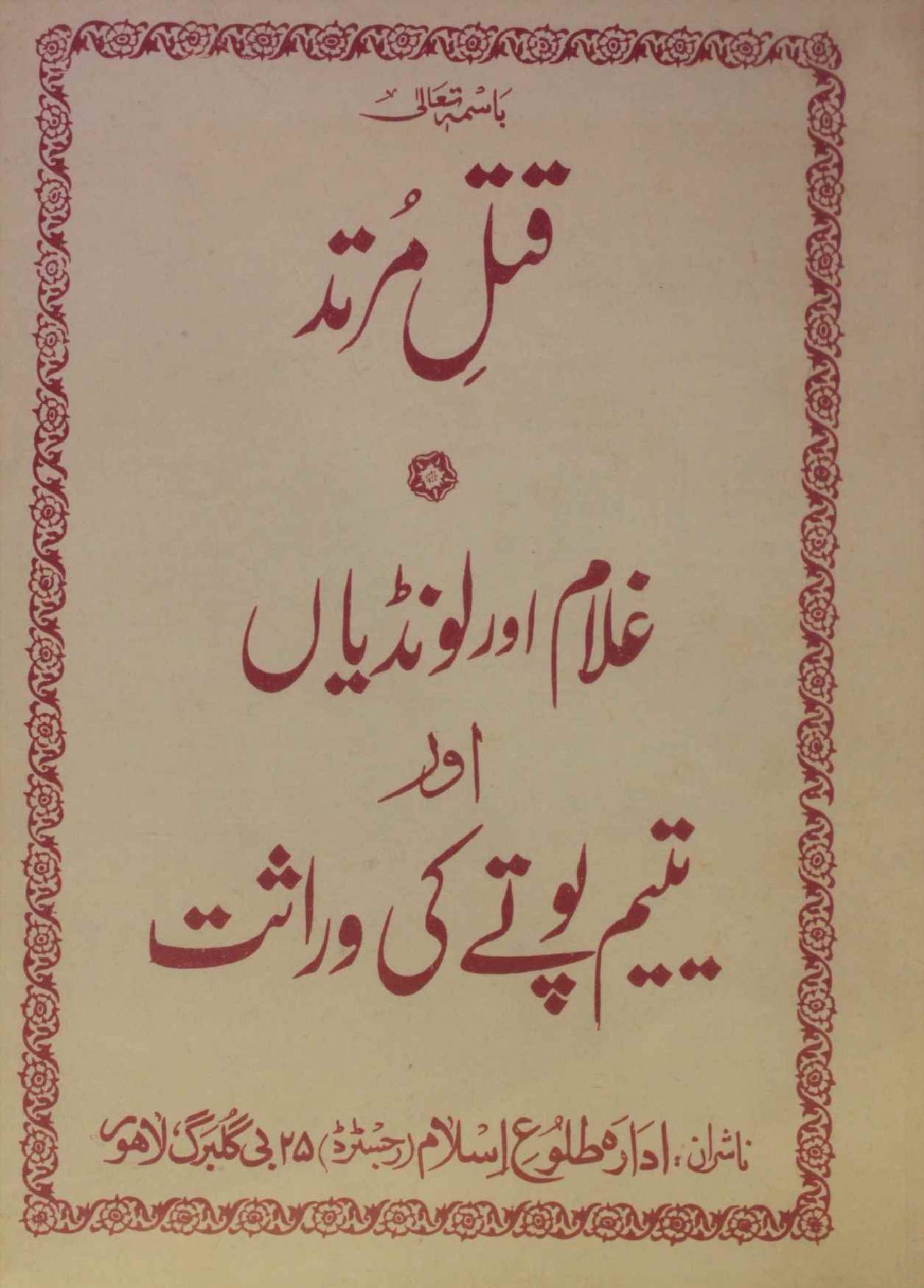
The book "Qatal-e-Murtid" by Idara Tul'u Islam offers a critical examination of Islamic laws and how their interpretation and implementation have been influenced by personal interests and societal power structures. Written in Urdu, the book delves into the ways certain Muslims have historically molded religious laws to align with their agendas, prioritizing their own benefits over the principles of justice. It highlights how the wealthy and powerful manipulate these laws to govern unlawfully, perpetuating inequality and injustice within society. Additionally, the book draws parallels to the current scenario in Pakistan, shedding light on similar practices in the country's legislative process. It critiques the misuse of authority in crafting laws, questioning their alignment with Islamic teachings and principles of fairness. The book offers a thought-provoking perspective on the interplay between religion, law, and power, urging readers to reflect on the authenticity and ethical basis of legal frameworks in Islamic and Pakistani contexts.
Published By:
Published Date:
June 15, 2026
Pages:
124
Subjects:
Available Format:
(19.38)
Action:
Description
The book "Qatal-e-Murtid" by Idara Tul'u Islam offers a critical examination of Islamic laws and how their interpretation and implementation have been influenced by personal interests and societal power structures. Written in Urdu, the book delves into the ways certain Muslims have historically molded religious laws to align with their agendas, prioritizing their own benefits over the principles of justice. It highlights how the wealthy and powerful manipulate these laws to govern unlawfully, perpetuating inequality and injustice within society. Additionally, the book draws parallels to the current scenario in Pakistan, shedding light on similar practices in the country's legislative process. It critiques the misuse of authority in crafting laws, questioning their alignment with Islamic teachings and principles of fairness. The book offers a thought-provoking perspective on the interplay between religion, law, and power, urging readers to reflect on the authenticity and ethical basis of legal frameworks in Islamic and Pakistani contexts.