


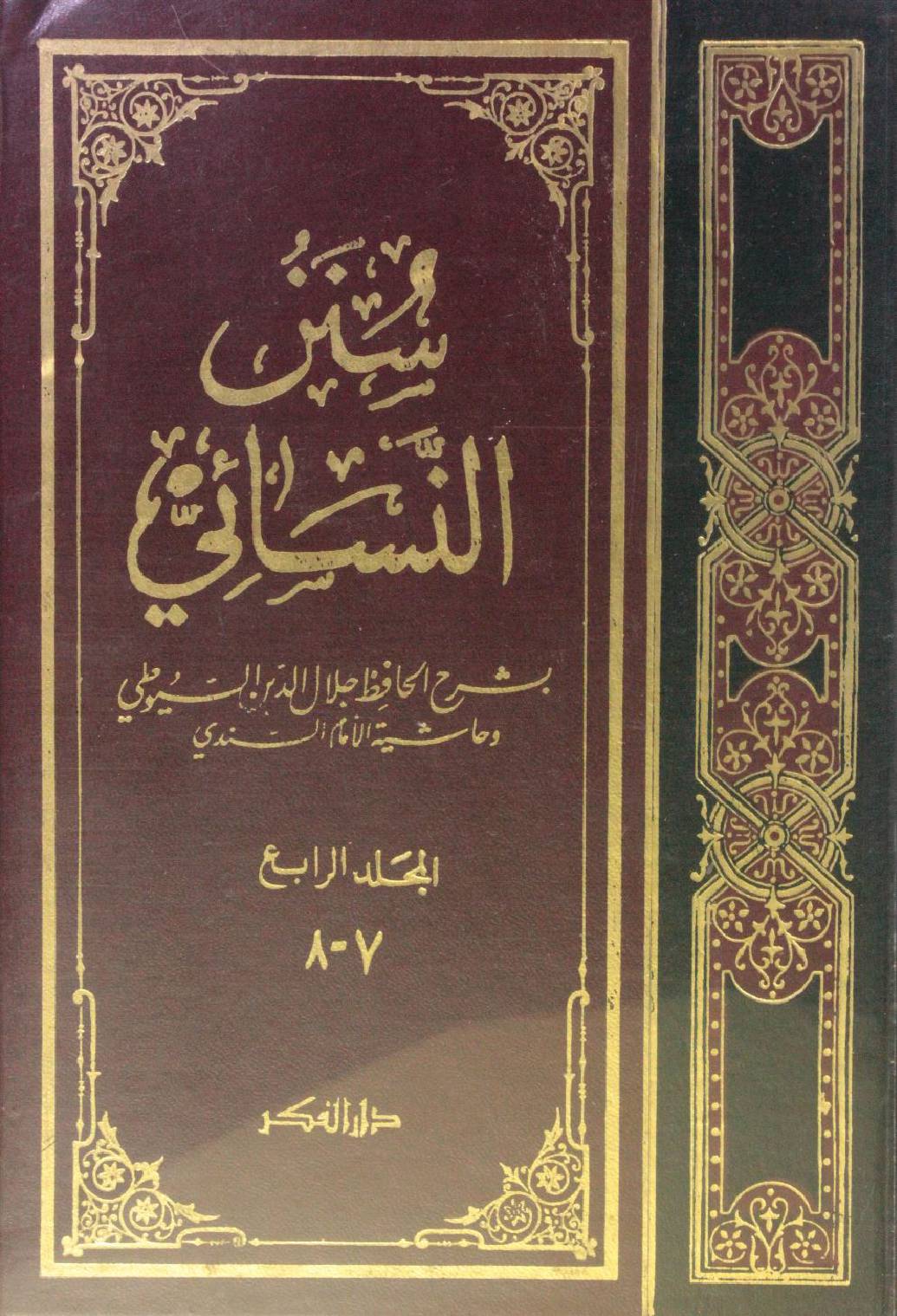
Sunan Al Nasa'i volume 4
Sunan al-Nasa'i is one of the six major hadith collections in Sunni Islam, known collectively as the "Kutub al-Sittah" (The Six Books). Compiled by the scholar Abu Abdur-Rahman Ahmad ibn Shu'ayb al-Nasa'i, who was born in 829 CE and died in 915 CE, this collection is highly regarded for its rigorous criteria for authenticity and precision in narrations. Al-Nasa'i's collection is often divided into two parts: 1. As-Sunan al-Kubra (The Greater Sunan): This is the larger compilation which includes a more extensive collection of hadiths. 2. Sunan al-Sughra (The Smaller Sunan or The Selected): This is a more concise version of the larger work, consisting of hadiths that al-Nasa'i considered most authentic and relevant. Sunan al-Nasa'i covers various aspects of Islamic jurisprudence, ethics, and theology. It is valued for its methodological rigor, where al-Nasa'i applied strict criteria to ensure the reliability of the hadiths included. This work is considered by many scholars to be among the most reliable hadith collections, ranking just after Sahih al-Bukhari and Sahih Muslim in terms of authenticity.
Published By:
Published Date:
June 15, 2026
Pages:
672
Subjects:
Available Format:
(154.16)
Action:
Description
Sunan al-Nasa'i is one of the six major hadith collections in Sunni Islam, known collectively as the "Kutub al-Sittah" (The Six Books). Compiled by the scholar Abu Abdur-Rahman Ahmad ibn Shu'ayb al-Nasa'i, who was born in 829 CE and died in 915 CE, this collection is highly regarded for its rigorous criteria for authenticity and precision in narrations. Al-Nasa'i's collection is often divided into two parts: 1. As-Sunan al-Kubra (The Greater Sunan): This is the larger compilation which includes a more extensive collection of hadiths. 2. Sunan al-Sughra (The Smaller Sunan or The Selected): This is a more concise version of the larger work, consisting of hadiths that al-Nasa'i considered most authentic and relevant. Sunan al-Nasa'i covers various aspects of Islamic jurisprudence, ethics, and theology. It is valued for its methodological rigor, where al-Nasa'i applied strict criteria to ensure the reliability of the hadiths included. This work is considered by many scholars to be among the most reliable hadith collections, ranking just after Sahih al-Bukhari and Sahih Muslim in terms of authenticity.